Buying Land Or Acreage Around Heathsville: Key Local Insights
June 25, 2026
June 25, 2026
Wondering if that piece of land near Heathsville is truly buildable, or just looks good on paper? You are not alone. Buying land in Northumberland County can be a smart move, but it often comes down to much more than acreage and price. If you want to avoid surprises, it helps to understand the local rules, site constraints, and approval steps before you commit. Let’s dive in.
Land around Heathsville comes with a more rural approval process than many buyers expect. Northumberland County’s adopted 2026 Comprehensive Plan says Heathsville has a private water system, but there is no central sewer system in the area. County sewer service is limited to select locations in Callao, Fleeton, and Reedville.
That changes the way you should evaluate a parcel. Instead of starting with price per acre, you should start with whether the land can support your intended home site, septic system, driveway, and overall layout. A beautiful tract is only as useful as its real-world buildability.
Heathsville is also the county seat, so many land-use questions run through county offices there. Online tax maps and GIS tools can help you do an early screen, but they are not a substitute for a survey, zoning verification, or Health Department review.
In this market, usable land is often more important than total land. A parcel may look large enough for your plans, but soils, setbacks, frontage, access, and environmental conditions can reduce where you can actually build.
Northumberland County’s plan points to several common local constraints. These include low-lying shoreline areas, stream banks, high water tables, and poor soil permeability. Those conditions can affect septic approval, grading, and the overall cost and timeline of improvement.
If you are comparing two parcels, the better buy is not always the bigger one. The stronger value may be the lot with clearer access, better soils, and fewer approval hurdles.
Before you get attached to a parcel, confirm two basics early: the zoning district and whether the land is already a legally created lot. Those two points shape almost everything that comes next.
Northumberland County’s subdivision rules require platting and final approval before sale in cases where land is being divided. So even if a property is being marketed as a future homesite, you still need to know whether it already exists as a separate legal lot or whether subdivision work is still needed.
Several zoning districts come up often when buyers are looking at land around Heathsville.
The A-1 district is intended to protect farms, forests, watersheds, and low-density rural character. The minimum lot area is 1 acre, and minimum frontage is 125 feet. Setbacks generally require structures to sit 35 feet from a street right-of-way that is 50 feet or wider, or 60 feet from the center line where the right-of-way is narrower.
The R-1 district has a minimum lot area of three-quarters of an acre and minimum frontage of 125 feet. The same 35-foot or 60-foot setback rule applies. This district also has specific rules for chickens and livestock, so a rural-looking property should not be assumed to allow every small-farm use you may have in mind.
The R-2 district requires a minimum lot area of 1 acre and 125 feet of frontage. It is designed with shoreline protection in mind, which means waterfront lots may face additional environmental review compared with inland parcels.
A parcel may look perfect for chickens, fencing, or a small homestead setup, but local rules still matter. In R-1, the ordinance allows up to 12 chickens per 2 acres and one livestock animal per 5 acres if county conditions are met. More intensive uses may require a conditional use permit.
This is a good reminder that land should be checked against the actual zoning rules, not just the listing description or the surrounding scenery.
For many land buyers near Heathsville, the septic question is the make-or-break issue. Northumberland County says its soil surveys are planning tools, not final guarantees of buildability. Septic suitability is determined case by case by the Virginia Department of Health.
That means you should treat soil maps as a first filter, not a final answer. The USDA Web Soil Survey can help you get an early read on the property, but your actual decision should depend on local professional review and Health Department guidance.
Northumberland County also has a Safe and Adequate Sewage Disposal System Inspection form that asks the Virginia Department of Health to evaluate onsite sewage and water supply for a proposed use. That is a strong sign that septic and water feasibility should be confirmed early when you are buying vacant land.
This is one detail buyers often miss. For lots recorded after October 1, 1989, where public sewer is not provided, the zoning ordinance requires both a primary drainfield site and a reserve drainfield site approved by the Health Department.
For older lots, drainfield approval is still expected unless the Health Department cannot locate both sites. In practical terms, you are not just looking for a place to put a house. You are also looking for enough suitable land to support the septic layout the county requires.
The Northumberland County Health Department in Heathsville handles local environmental health questions. Three Rivers Health District says environmental health staff manage onsite sewage and private well work.
If you are serious about a parcel, ask early about:
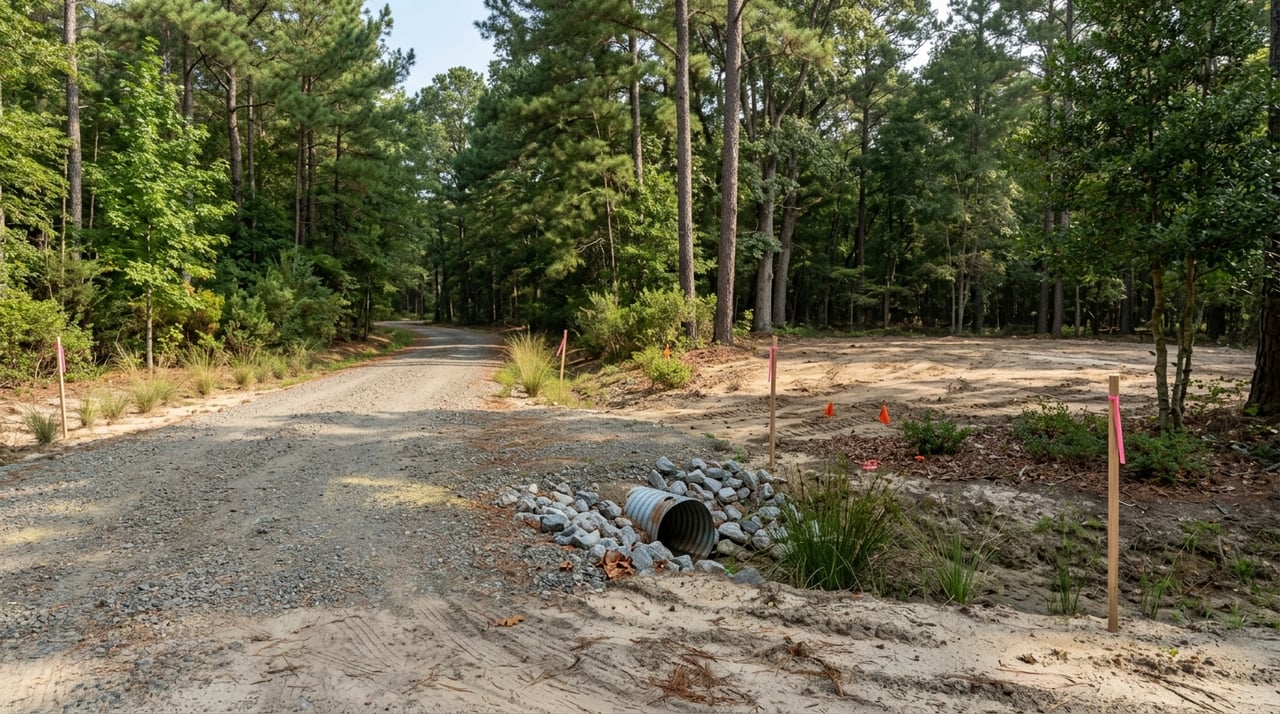
A land parcel is not truly ready until you know how access will work. If the property fronts a state-maintained road, VDOT says work on or connections to state highway right-of-way require a land use permit.
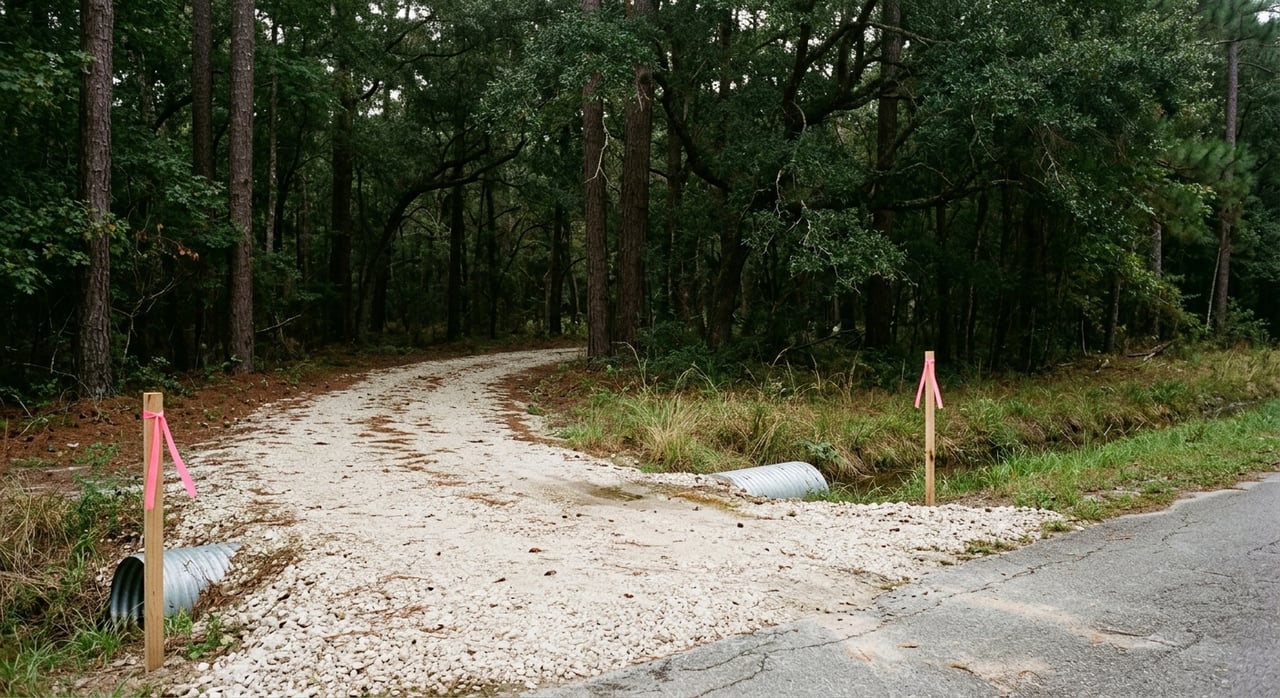
VDOT’s private entrance permit applies to entrances serving up to two private residences or agricultural access. So if you are planning a driveway, culvert, or new entrance, those details should be reviewed early.
Before moving too far ahead, confirm:
Access issues can affect both cost and site design, especially on narrow frontage or wooded lots.
Waterfront land can be appealing, but it often comes with extra review. Northumberland County has separate chapters for Chesapeake Bay Preservation Area rules, floodplain management, and wetlands.
The county’s wetlands ordinance requires a permit application for wetland use or development and includes a public hearing process. That means shoreline or tidal parcels may take longer to improve than inland tracts, even when the lot looks attractive at first glance.
The county’s 2026 plan also notes that low-shelf and shoreline areas may have poor percolation, high water tables, shrink-swell soils, and tidal flooding. Those factors can complicate septic design, site work, and improvement timelines.
Even after zoning, access, and septic look promising, you may still have another review layer. Northumberland County includes a Land Disturbing Permit Application on its Building and Zoning forms page.
That matters because clearing, grading, driveway installation, and general site prep can trigger county review under erosion and sediment control rules. In short, even a fairly straightforward lot can involve more than one approval track.
When you buy land near Heathsville, a careful sequence can save time and money. The most practical approach follows the way local reviews are organized.
Use this sequence as a working guide:
This order helps you narrow major issues before spending heavily on design or improvement plans.
The right questions can help you move from guesswork to clarity.
If you are buying land or acreage around Heathsville, the best question is not just “How many acres?” It is “How usable are those acres for what I want to do?” In Northumberland County, that answer often depends on zoning, legal lot status, septic feasibility, well planning, road access, and environmental review.
With the right local guidance, you can spot red flags early and focus on parcels that truly fit your goals. If you are thinking about buying land in the Northern Neck and want practical help evaluating your options, reach out to Middle Bay Realty for clear, local guidance.
Stay up to date on the latest real estate trends.
Experience a real estate partnership built on trust, expertise, and genuine care. We bring a lifelong understanding of what “home” truly means to every client and every decision.