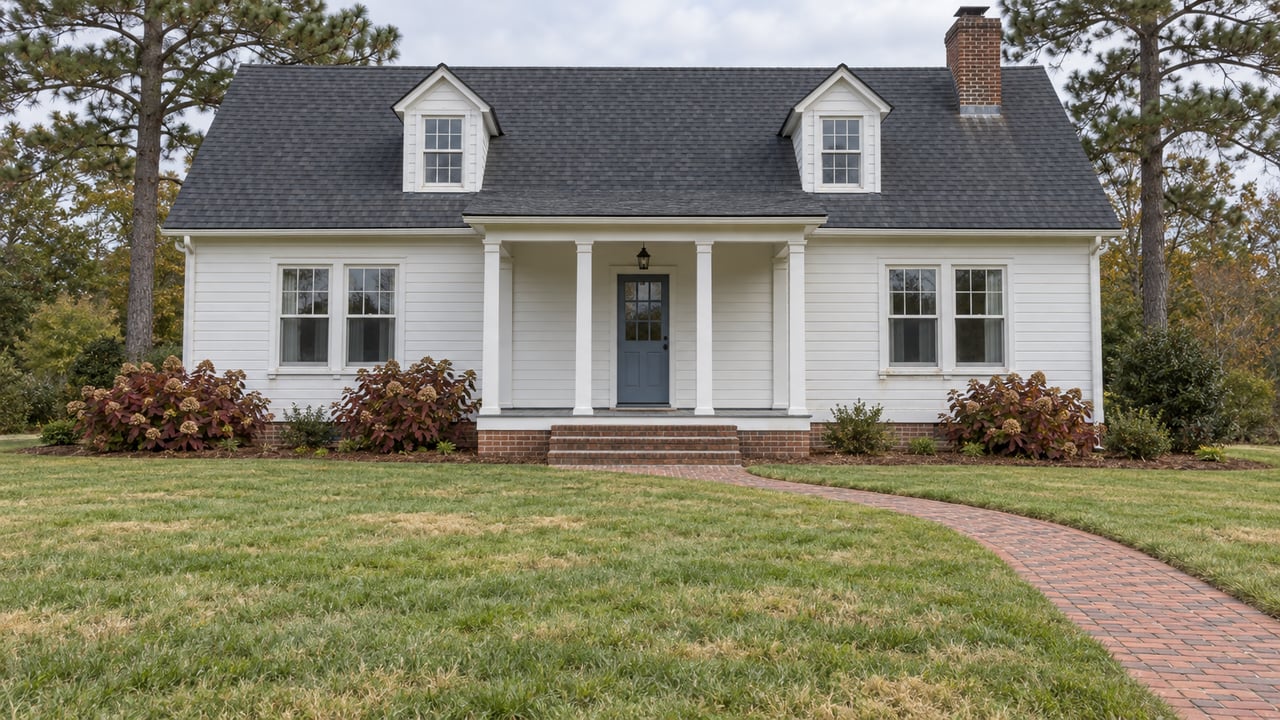
Northumberland Cut Its Tax Rate. Why Didn't Every Burgess Tax Bill Fall With It?
October 29, 2026
October 29, 2026
Two numbers came out of the Northumberland County budget this year. The real estate tax rate dropped from $0.74 to $0.51 per $100 of assessed value, a cut of nearly a third. The county's own budget figures also show that the new rate raises the total tax burden by 8%. For a home in Burgess, the 8% is the better guide, and how that 8% spreads across individual bills depends on how each property's assessment moved.
The gap between the two comes from the county's general reassessment, which took effect January 1, 2026. Its bills are now landing in mailboxes. If you're comparing a house off Northumberland Highway with one across the line in Lancaster County, the tax figure on a listing sheet and the tax rate on a county website will both mislead you unless you know how the rate was set.
The annual tax figure on a property listing is normally whatever the owner last paid. In Northumberland, that means a 2025 bill: the old $0.74 rate applied to the old assessed value. Neither of those still holds.
The old values were well behind the market. In August 2025, county assessor Fred Pearson told supervisors that the average Northumberland homeowner would see values rise "around 70%." He told the Rappahannock Record that "I've been working off and on for Northumberland County for over 35 years. This is the largest increase I've ever seen." He said his method was to compare property sales against assessed values, and he warned it would be "the roughest reassessment you've ever had."
That 70% was a forecast for the average homeowner, made before notices went out and before appeals. Individual results vary by property, so reading a 2026 Burgess tax bill starts with the new assessed value printed on it, not with anything carried over from 2025.
Virginia requires a locality that reassesses to calculate an equalized tax rate. County administrator Luttrell Tadlock described it to supervisors in December as the "rate that would generate the same amount of revenue as the previous year, before reassessments," according to the Rappahannock Record. In the same statement, he said assessments reflect "strong real estate market activity, including higher home sale prices across the region," not the budget needs of the schools or any county department.
For Northumberland, the equalized rate came to $0.4721. The proposed and later adopted $0.51 sits "nearly four cents ($.0379) or 8%" above it, the Record reported in May. Supervisors adopted the $0.51 rate unanimously on June 18 as part of a $48.7 million budget. Projected revenues rose 8% because of the real estate tax increase.
Here's the mechanism. The equalized rate is built from the county's total assessed value. Divide the old rate by the equalized rate, $0.74 by $0.4721, and you get about 1.57. That works out to an implied countywide value increase of roughly 57%. It's our arithmetic from the county's published figures, not a number the county reported. Any property whose value rose by about that much would have stayed tax-neutral at $0.4721 and now pays about 8% more at $0.51. A property that rose faster pays more than that. One that rose more slowly pays less.
The break-even point at the new rate is about 45%. A property whose assessment rose less than that should see a lower bill than in 2025. Above it, the bill goes up. The table works through a home assessed at $100,000 in 2025, so you can scale it to any property.
| 2025 assessed value | Assessment change | 2026 assessed value | 2025 bill at $0.74 | 2026 bill at $0.51 | Change in bill |
|---|---|---|---|---|---|
| $100,000 | +30% | $130,000 | $740 | $663 | about 10% lower |
| $100,000 | +45% | $145,000 | $740 | $740 | roughly flat |
| $100,000 | +57% | $157,000 | $740 | $801 | about 8% higher |
| $100,000 | +70% | $170,000 | $740 | $867 | about 17% higher |
These are worked examples, not reported outcomes for any particular house. They show why a lower rate and a higher bill can both be true in the same county. If the assessor's 70% forecast held for the average homeowner, it sits in the bottom row.
The $0.51 was the compromise. At a May 28 hearing, residents questioned a proposed 21% property tax increase, the Rappahannock Record reported. Supervisors then cut $562,089 from proposed spending and adopted the 8% version.
For a buyer, that history explains the sticker. A $0.51 rate looks unusually low next to neighboring counties. It looks that way because values were reset to the market, not because owning a home got cheaper.
Buyers comparing Burgess with Kilmarnock or White Stone often line up the two county rates. Lancaster County adopted $0.60 per $100 on May 28, 2026, up from $0.55. Properties inside the Town of Kilmarnock also carry a town rate of $0.10 per $100, which the town re-adopted on June 22, 2026, effective back to January 1.
Set side by side, Burgess at $0.51 and in-town Kilmarnock at a combined $0.70 seem far apart. How far apart the bills actually are also depends on how current each county's assessed values are.
Northumberland's values were just reset from a recent sales study. Lancaster's most recent reassessment was reported underway in late 2023. At that point the assessor said residential values had risen about 60% since the previous reassessment in 2019, and residential increases averaged 44%. That is how far assessments can drift in four years in this part of the Northern Neck. A rate applied to recent values and a rate applied to older values don't measure the same thing. Comparing them is like comparing two prices in different currencies.
The useful comparison is the actual current-year bill on each specific property. Pull it from the county records, not from a listing.
Northumberland bills real estate tax once a year. County code sets the due date as November 5. This year is different. On October 23, 2026, the county announced a one-time extension to Friday, November 20, 2026. The board cited reassessment-year delays, a staffing shortage, and printing time that shortened the usual window between mailing and the due date. The extension rests on Virginia Code § 58.1-3916 and doesn't change the due date for future years.
One more change may be coming. In August, supervisors heard a proposal to split the real estate bill into two payments, due June 1 and December 5, starting in 2027. The goal was to improve county cash flow after borrowing that carried $165,000 in direct costs. Constitutional officers raised postage, staffing, and software concerns, and the board asked staff to study it, Citizen Portal reported. The Rappahannock Record's coverage also describes it as a proposal, not an adopted change. If you're buying in Burgess and expect to close in 2027, ask your lender or settlement agent how a two-payment schedule would affect your escrow, if it's adopted.
I'm closing on a Burgess home this fall. Whose name is on the 2026 bill? Taxes are usually split between buyer and seller at settlement, and the timing of this year's extended due date can affect who pays the county directly. Your settlement agent is the right person to confirm how your contract and closing statement handle it.
Can I still appeal my 2026 assessment? The assessor's appeal window for the 2026 values ran from December 8 to 19, 2025. Written appeals were due December 15, 2025. For anything after that, contact the county directly about the Board of Equalization process and its current timing.
Is there tax relief for older or disabled owners? Northumberland's relief ordinance, adopted in 2006, covers owner-occupants 65 or older and owners found permanently and totally disabled. It caps prior-year combined income at $20,000 and net worth at $100,000, not counting the home and up to one acre. Relief is limited to $400 a year, and applications are filed between February 1 and May 1. Those limits come from the codified ordinance, so confirm the current figures with the Commissioner of the Revenue before you rely on them.
This post is general information, not legal, tax, or financial advice. Please confirm your own situation with the county, your settlement agent, or a tax professional.
If you're weighing a home in Burgess and want to know what it will actually cost to own once the new assessment is factored in, we're happy to pull the current county record with you and work through the numbers before you write an offer. Reach out to Middle Bay Realty and Contact Us.
Stay up to date on the latest real estate trends.

Experience a real estate partnership built on trust, expertise, and genuine care. We bring a lifelong understanding of what “home” truly means to every client and every decision.